
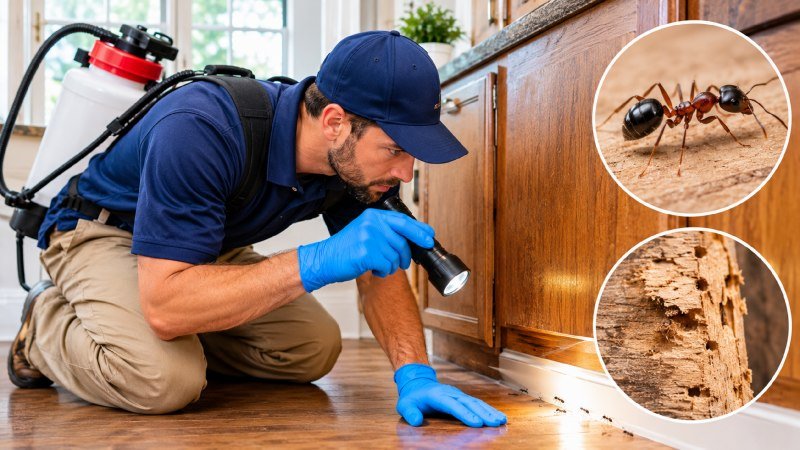
Discovering large ants around a window frame, kitchen cabinet, or wooden deck can raise questions about the condition of a home’s structure. Carpenter ants are especially concerning because they excavate wood to create nesting galleries, sometimes within areas that are already weakened by moisture. Unlike termites, they do not consume wood for nutrition, but their nesting activity can still damage important wooden components over time. For homeowners in Kennesaw, recognizing the signs of an infestation and understanding how professional treatment works can make the response more effective. Proper control involves more than removing visible ants. It requires identifying the species, locating the colony, addressing moisture problems, and reducing the conditions that allow these insects to establish new nesting sites.
1. Identifying Carpenter Ants Before Choosing a Treatment
Correct identification is the first step in addressing a suspected carpenter ant infestation. These ants are generally larger than many common household species, with workers often measuring approximately one-quarter to one-half inch long. Their coloring is usually black, although some species have reddish or reddish-brown sections. Workers within the same colony can vary considerably in size, so differences in appearance do not necessarily indicate different species.
Carpenter ants have a single node between the thorax and abdomen, and their thorax appears smoothly rounded when viewed from the side. These characteristics help distinguish them from other ants. Their behavior also offers useful clues. Workers commonly travel along established routes while searching for food, particularly during evening and nighttime hours.
One recognizable sign is frass, a mixture of wood fragments, insect remains, and other debris pushed out of nesting galleries. Small piles may appear beneath wooden trim, window frames, door casings, or other structural components. Homeowners might also notice hollow-sounding wood, rustling inside walls, or winged ants emerging indoors.
Distinguishing carpenter ants from termites matters. Carpenter ants excavate relatively clean galleries, while termite activity can leave different patterns of damage and material within the wood. A proper inspection should establish the species before any control method is selected. <Cite refs={[“turn172705search0″,”turn172705search1″,”turn172705search4”]}/>
2. Why Moisture-Damaged Wood Often Contains Hidden Nests
Finding carpenter ants indoors often points to a nesting opportunity rather than a simple food-related visit. These insects prefer wood that has become damp, softened, or weakened through decay. Leaking pipes, roof damage, clogged gutters, poor drainage, and inadequate crawlspace ventilation can create conditions that make wooden structures easier to excavate.
Kennesaw homes may have several potential nesting locations, including older window frames, roof edges, decks, wall cavities, and wooden areas near plumbing fixtures. Moisture can remain hidden for extended periods, especially behind finished walls or beneath flooring. Consequently, visible ants may appear far from the actual source of the infestation.
Carpenter ants also have a colony structure that complicates inspection. A primary nest is commonly established outdoors in a dead tree, stump, or decaying log. Workers may establish satellite nests inside a building, sometimes in moisture-damaged wood or wall voids. An indoor colony can therefore remain connected to a larger outdoor population.
A careful inspection should examine both the building interior and its surrounding property. Following worker ants along their travel routes can help reveal entry points and nesting areas. Inspectors may also examine areas where moisture damage is suspected, including roof penetrations, plumbing connections, crawlspaces, and window openings.
Locating the nest is more useful than simply counting visible ants. Without identifying the nesting areas, treatment may reduce surface activity while leaving the main colony or satellite nests undisturbed. <Cite refs={[“turn172705search1″,”turn172705search4″,”turn172705search5”]}/>
3. How Professional Treatment Targets the Colony
Once the ant species and nesting locations have been established, the treatment approach can be selected according to the infestation’s structure. Effective carpenter ant treatment Kennesaw homeowners receive should focus on the colony rather than only the workers appearing inside kitchens, bathrooms, or other living spaces.
Baiting is one possible method. Worker ants collect suitable bait while foraging and transport it toward the nest, allowing the active ingredient to reach other colony members. The formulation matters because carpenter ants may seek different food sources depending on their nutritional needs. A bait that attracts workers at one time may receive little attention under different conditions.
Other treatment methods may be appropriate when a colony occupies an inaccessible wall cavity or another enclosed space. Depending on the inspection findings, a licensed professional may use a properly labeled liquid treatment, dust application, or another targeted method. Placement must account for the nest location, building materials, occupants, and potential exposure to children and pets.
Outdoor nesting areas may require attention as well. A colony inside a wall can be associated with a parent nest in a nearby tree or decaying stump. Treating only the indoor activity may therefore leave an important source untouched.
The selected method should follow the actual nesting pattern, not a routine assumption that every infestation requires the same product. Homeowners should receive an explanation of the intended treatment areas, safety precautions, and expected response. Colony control can take time, particularly when slow-acting methods allow workers to carry treatment back to concealed nests.
4. What Happens During Inspection, Application, and Follow-Up?
A treatment visit generally begins with an assessment of the reported activity. The inspector examines visible ant trails, possible entry points, wood damage, and areas where moisture may have accumulated. Information from the homeowner can help narrow the search, especially when ants appear repeatedly in the same room or near a particular window, door, or plumbing fixture.
The inspection should distinguish between active nesting and occasional foraging. Ants entering a home to search for food do not necessarily have an indoor nest. By contrast, recurring activity near damaged wood, frass deposits, or winged ants emerging from a structure may indicate a more established problem.
After locating likely nesting areas, the treatment plan should identify which locations require direct attention. Treatment may involve indoor satellite nests, outdoor colonies, or both, depending on the evidence. Treatment may include targeted bait placement, appropriately selected insecticides, and measures to limit further entry.
Homeowners should also understand what happens after application. Some methods produce gradual results because workers must carry the treatment into the colony. Ant sightings may continue for a period while the control process takes effect. However, persistent or increasing activity should be reported rather than assumed to be normal.
Follow-up inspections help determine whether the colony has been controlled and whether additional activity remains. Professionals may reassess bait acceptance, inspect previously identified trails, and check for new evidence around the structure. Clear communication about access restrictions, ventilation, cleaning instructions, and product-specific precautions helps households prepare for each visit safely.
5. Correcting Property Conditions to Reduce Future Infestations
Treatment addresses existing ant activity, but long-term prevention depends heavily on correcting the conditions that support nesting. Moisture management deserves particular attention because carpenter ants often select wood that has already been weakened by water exposure. A colony may be eliminated, but untreated leaks and decaying materials can continue to attract other nesting insects.
Homeowners should examine areas where water enters or collects around the building. Roof leaks, damaged flashing, overflowing gutters, leaking plumbing connections, and poor drainage can gradually affect wooden structures. Crawlspaces and attics also need suitable ventilation to prevent persistent dampness.
Several maintenance measures can help reduce the likelihood of recurring carpenter ant activity:
- Repair plumbing, roof, and window leaks promptly.
- Replace severely damaged or decaying wooden components.
- Keep gutters clear and direct rainwater away from the foundation.
- Improve crawlspace ventilation and address persistent dampness.
- Trim branches and shrubs that touch the roof or exterior walls.
- Store firewood away from the house and keep it elevated.
- Remove old stumps, dead trees, and decaying wood near the property.
Exterior maintenance should also include checking gaps around utility lines, pipes, doors, and windows. Sealing suitable openings can reduce access, although exclusion work should not trap an active colony inside a structure.
Homeowners should remember that carpenter ants do not need to be eating wood for their presence to matter. Their galleries can expand through structural materials, and the moisture problem that attracted them may create separate concerns involving wood decay. Repairing the underlying damage is therefore part of a complete response, not an optional cosmetic improvement.
A combination of colony control, moisture correction, and routine property maintenance provides a more lasting approach than repeated applications aimed only at visible ants.
Final Analysis
Carpenter ant problems require more than removing the insects visible around a property. Successful control depends on accurate identification, locating primary and satellite colonies, and selecting treatment methods suited to the nesting locations. For Kennesaw homeowners, correcting moisture damage is equally important because damp or decaying wood can continue attracting nesting ants after an infestation has been addressed. Regular inspections, timely structural repairs, and sensible exterior maintenance help reduce future risks. By understanding each stage of the process, homeowners can make informed decisions, recognize why follow-up matters, and address the underlying conditions rather than repeatedly reacting to individual ant sightings.