
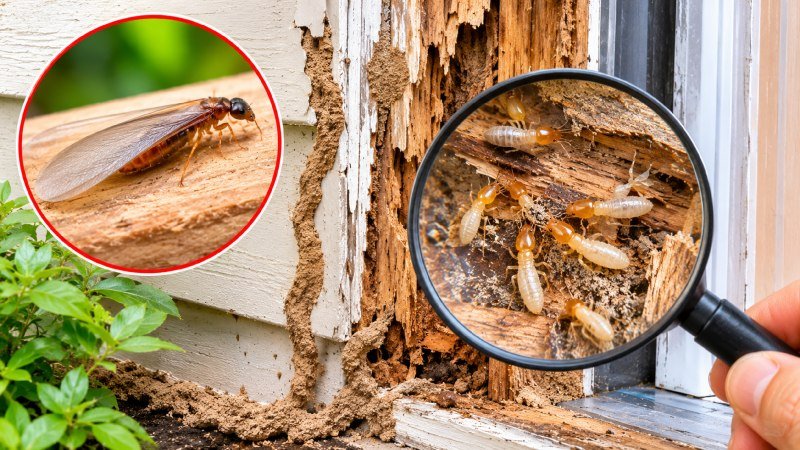
Termites rarely announce themselves. A door that sticks after a wet summer, a faint ripple under paint, or a scatter of translucent wings on a windowsill can seem unrelated until someone connects them. Jefferson Parish offers termites nearly ideal conditions: warm temperatures, high humidity, heavy rainfall, and old wood in everything from raised cottages to backyard fences. Both native subterranean termites and the aggressive Formosan species live in the region, and a mature colony can work through framing for years before obvious damage appears. Recognition is the best defense, because early findings cost far less to repair. The sections below describe why local conditions favor termites, then walk through mud tubes, discarded wings, damaged wood, and the steps to take after spotting a sign.
Why Warm, Wet Conditions Around Kenner Favor Termite Colonies
Termites need moisture, warmth, and cellulose, and southeast Louisiana provides all three. Soil stays damp for much of the year, drainage is often slow, and many homes sit on piers or slabs close to the ground. Subterranean termites live in the soil and travel to wood through protected routes, so a house with wood near the soil line is within easy reach.
Formosan termites add pressure. Their colonies are far larger than those of native species, and they can establish nests above ground when a moisture source, such as a leaking roof valley or a failing gutter, supplies water. That ability lets them attack upper floors and attics. Spring evenings bring swarms, when winged reproductive termites leave the colony and drift toward lights.
Landscaping and building details increase the risk. Mulch piled against siding, firewood stacked beside the house, wood fences touching the structure, and soil built up over a slab edge all create bridges. Reducing those contact points will not eliminate termites from the area, yet it shrinks the number of easy routes. Knowing which conditions invite activity points the eye toward the places most worth checking.
Mud Tubes and Other Signs at the Foundation
Mud tubes are the clearest outdoor evidence. Subterranean termites build thin tunnels from soil, saliva, and debris, about the width of a pencil, running up foundation walls, piers, and slab edges. The tubes protect them from dry air and predators while they travel between the colony and wood. Look along the inside of crawl space walls, on pier posts, beneath porches, and where plumbing or conduit enters the slab.
A single tube does not always mean current activity. Old, abandoned tubes crumble easily. To test one, break a small section with a screwdriver and check again a few days later. Fresh mud patched over the break, or tiny pale workers inside, suggests an active colony. Avoid spraying, which can drive termites elsewhere without ending the problem.
Other foundation clues include drywood-like piles of tiny pellets, though these belong to a different type of termite, and soil mounds near the structure. Cracked or bubbling paint near the base of walls, hollow-sounding baseboards, and damp spots add to the picture. A flashlight and a few minutes with a notebook around the perimeter each spring will catch most visible signs.
Discarded Wings and Swarmers Point to a Nearby Colony
Swarmers appear in warm months, often after rain, and their discarded wings are easy to overlook. After a short flight, reproductive termites shed their wings, leaving small, translucent piles on windowsills, in spider webs, near light fixtures, and along door thresholds. Finding a pile indoors suggests that swarmers emerged inside the house or close enough to enter.
Flying ants swarm at similar times, so identification matters. Termites have a thick, straight body with a broad waist, straight beaded antennae, and four wings of equal length. Ants show a pinched waist, elbowed antennae, and front wings longer than the back pair. A phone photo with a coin for scale helps an inspector confirm which is present.
Other insects also show up around lights and in damp spaces, and not every unfamiliar creature in a crawl space is a termite. The question “are spider crickets dangerous to Louisiana homes” can arise when long-legged, jumpy insects appear in a garage or cellar. Identifying the insect before assuming termite activity avoids unnecessary worry and unnecessary treatment.
Damaged Wood and Quiet Warning Signs Inside the Home
Termites eat wood from the inside, so the surface often looks sound while the interior is hollow. Tapping a baseboard, door frame, or window sill with a screwdriver handle can reveal a dull, papery sound. Probing with a blunt tool may break through a thin skin of wood into a honeycomb of galleries filled with mud and debris.
Subtle changes inside the house tell their own story. Doors and windows that suddenly stick can reflect swollen, damaged framing. Paint may bubble or ripple like water damage. Floors may feel soft near walls, and tiny holes may appear in drywall or trim. Termites can also leave maze-like patterns on the surface of wood or paper.
Moisture and termites often travel together. A leaking pipe, a dripping air-conditioner line, or a roof leak can supply water and soften wood, attracting colonies that would otherwise stay below ground. If signs cluster near a bathroom, kitchen, or roof penetration, trace the water source first. Homeowners who also run across unfamiliar insects in damp areas should keep notes of every sighting, since a record separates harmless visitors from real threats.
What to Do After Spotting a Sign
Calm, deliberate steps limit harm. Avoid disturbing the area, since breaking tubes or spraying repellents can scatter workers and complicate treatment. Instead:
- Photograph the sign with a coin or ruler for scale, and note the date and location.
- Collect a few insects in a sealed container or a piece of tape, if possible.
- Check for moisture sources nearby and fix any leaks.
- Pull mulch, firewood, and soil away from the foundation.
- Schedule an inspection by a licensed professional.
An inspector will look at the structure, soil line, crawl space, and attic, and may use moisture meters or sensors to find damp areas. Treatment may combine soil applications, baits, and wood treatments, and the plan depends on the species and the extent of the damage. Get written findings that describe what was seen and where.
Annual inspections add protection, especially for older homes. Between visits, walk the exterior each spring and autumn, check crawl spaces if accessible, and keep gutters clean. Repair damaged wood promptly, since softened boards invite further activity.
Final Analysis
Termite recognition comes down to careful looking in the right places. Mud tubes at the foundation, discarded wings near lights, hollow-sounding wood, and bubbling paint each point to activity long before a floor gives way. Kenner’s warm, damp climate keeps pressure steady, so routine checks and moisture repairs matter more than any single dramatic measure. Photographs, notes, and prompt professional inspection turn scattered clues into a clear plan. Homeowners who act early usually deal with a repair, not a rebuild.