
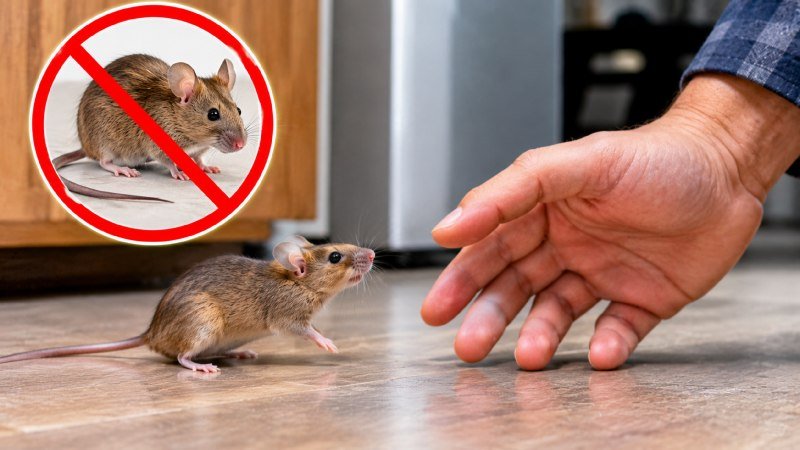
A mouse moving across a kitchen floor or appearing inside a storage cabinet can catch any homeowner off guard. Although these small rodents generally avoid people, an unexpected encounter may raise concerns about bites, injuries, and possible exposure to germs. Their behavior is usually driven by survival instincts, which means they prefer hiding, escaping, and searching for food rather than confronting humans. However, certain situations can lead to defensive reactions, particularly when a mouse feels trapped or threatened. Recognizing how mice behave, why close contact creates unnecessary risks, and how to respond to signs of rodent activity helps homeowners protect their households without attempting to handle the animals themselves.
1. Why Mice Usually Avoid Human Contact
House mice are naturally cautious animals. Their small size makes them vulnerable to larger animals, including household pets and humans. As a result, their typical response to movement, unfamiliar sounds, or sudden activity is to seek cover. A mouse may quickly disappear behind furniture, beneath appliances, or into a narrow opening when someone enters the room.
These rodents are generally most active during nighttime hours, although daytime sightings can occur. Their activity depends on food availability, nesting conditions, population pressure, and disturbances around their shelter. A mouse may travel along walls because these routes provide cover and reduce exposure to open spaces. Kitchens, basements, garages, and utility rooms often provide suitable conditions.
Mice also have strong survival instincts. They rely on their sense of smell, hearing, and touch to detect nearby threats. Their whiskers help them assess narrow openings and move through dark spaces. When a person approaches, escaping is usually the preferred response.
Seeing a mouse does not automatically mean it will approach or attack someone. However, repeated sightings may indicate that rodents have established a nesting area nearby. Droppings, gnawed packaging, and shredded paper can provide additional evidence of activity. Homeowners should investigate these signs without trying to locate or disturb the animals directly.
2. What Makes a Mouse Bite During a Close Encounter?
Although mice generally avoid confrontation, they can bite under certain circumstances. The question of whether mice can bite is particularly relevant when someone discovers a rodent inside a cabinet, storage container, or other confined space. A mouse that cannot identify a safe escape route may react defensively if a person reaches toward it or attempts to pick it up.
Cornered animals often have fewer options. A mouse trapped behind a heavy appliance or caught inside a container may perceive approaching hands as an immediate threat. Biting can become a defensive response when the animal feels physically restrained or believes escape is impossible. Handling a wild mouse increases this risk because the animal has no reason to trust human contact.
Several situations can increase the possibility of a defensive bite:
- Direct handling: Picking up a mouse, even briefly, can frighten it and trigger a defensive reaction.
- Restricted escape routes: A rodent trapped in a corner or enclosed space may respond aggressively when approached.
- Unexpected disturbance: Moving nesting materials, boxes, or stored belongings can startle a mouse resting nearby.
- Physical restraint: Attempting to hold an animal still can make it struggle and bite to escape.
A bite is not an indication that mice naturally seek out humans as targets. Rather, it usually reflects fear, confusion, or an attempt to escape a threatening situation. Homeowners should maintain distance and allow trained pest control professionals to manage the animal.
3. Health Concerns Associated With Mouse Bites and Rodent Activity
A mouse bite can break the skin and introduce bacteria from the animal’s mouth into the wound. Even a small puncture should receive appropriate attention because its appearance may not reflect the full extent of the injury. Redness, swelling, tenderness, and increasing discomfort are possible signs of a developing infection.
Anyone bitten by a mouse should wash the affected area thoroughly with soap and running water. Medical advice is appropriate, particularly when the wound is deep, bleeding persists, or signs of infection develop. A healthcare professional can assess the injury and determine whether additional treatment or a tetanus vaccination is necessary. Medical advice is also important if the person develops fever, unusual fatigue, or other symptoms after the incident.
Bites are only one part of the health concerns associated with rodents. Mice can contaminate food preparation areas, stored supplies, and household surfaces through urine and droppings. Their nesting materials may also contain contaminants. Contact with these materials, especially when contaminated dust becomes airborne, can create additional exposure risks.
Children and pets deserve particular consideration because they may approach rodents out of curiosity. A child might attempt to touch a mouse, while a dog or cat may chase one into a confined area. These interactions can result in scratches, bites, or contact with contaminated materials.
Homeowners should therefore treat evidence of rodent activity seriously without assuming every illness or skin irritation originates from a mouse. Identifying the actual source of exposure helps determine the appropriate response.
4. Preventing Close Encounters Through Better Household Practices
Preventing unwanted contact begins with making the home less attractive to rodents. Mice enter buildings in search of food, water, warmth, and shelter. Accessible pantry goods, pet food, cluttered storage spaces, and small structural openings can provide everything they need to remain indoors.
Homeowners asking “do mice bite” should consider prevention a more practical priority than attempting to interact with a rodent after discovering it. Reducing attractants and limiting access can lower the likelihood of encounters while addressing the conditions that support an infestation.
Food should be stored in tightly sealed containers rather than left in open bags or cardboard packaging. Crumbs, spilled ingredients, and pet food should be removed regularly. Garbage containers need secure lids, and waste should not accumulate near entrances or storage areas.
Structural maintenance also matters. Small openings around plumbing lines, electrical conduits, doors, and foundations can provide access. Mice can pass through surprisingly narrow gaps, so visible openings should be sealed with suitable rodent-resistant materials. Damaged door sweeps and loose vents should also receive attention.
Safe cleanup requires additional precautions. The Centers for Disease Control and Prevention recommends wearing rubber or plastic gloves and thoroughly wetting rodent droppings and urine with an appropriate disinfectant before removal. Dry sweeping or vacuuming should be avoided because these activities can release contaminated particles into the air. After removal, affected surfaces should be disinfected, waste should be disposed of properly, and hands should be washed thoroughly.
These practices reduce exposure while helping prevent recurring rodent activity. Heavy infestations may require professional assessment and additional protective measures.
5. Recognizing When Rodent Activity Requires Professional Attention
An occasional mouse sighting may appear manageable, but repeated activity often indicates a larger problem. Rodents reproduce quickly under favorable conditions, and a small number of animals can establish a nesting population inside wall cavities, attics, basements, or other concealed areas.
Homeowners should pay attention to patterns rather than relying on individual sightings. Fresh droppings appearing after cleaning, repeated gnaw marks, scratching sounds inside walls, and damaged food packaging can indicate continuing activity. Finding nesting materials behind appliances or inside storage areas provides further evidence that mice may be settling indoors.
Professional pest inspections can help identify where rodents enter, where they travel, and which areas support nesting. This assessment is useful because treating visible activity without addressing hidden access points may allow the problem to continue. A suitable control approach can include targeted trapping, exclusion work, sanitation improvements, and follow-up monitoring.
Pesticides and rodenticides also require careful use. Products should always be handled according to their labels, with particular attention to children, pets, and locations where food is prepared or stored. Improper placement can create unnecessary exposure risks and may leave rodents dying in inaccessible areas.
For larger infestations, contaminated insulation, extensive nesting, or rodent activity inside ventilation systems, specialized assistance may be necessary. A professional can assess the extent of the problem and recommend appropriate removal and cleanup procedures. Addressing both the animals and the conditions that attract them offers a more dependable approach than repeatedly reacting to individual sightings.
End Note
Mice are generally shy animals that prefer avoiding people, but fear and physical restraint can trigger defensive biting. Homeowners can reduce these encounters by avoiding direct handling, securing food supplies, sealing entry points, and maintaining clean storage areas. Safe cleanup is equally important because rodent urine, droppings, and nesting materials can create health concerns beyond the possibility of a bite. When signs of activity persist, a proper inspection can identify nesting locations and entry routes before the problem spreads. Understanding mouse behavior allows households to respond calmly, protect vulnerable family members, and address rodent activity without putting themselves or their pets in unnecessary danger.