
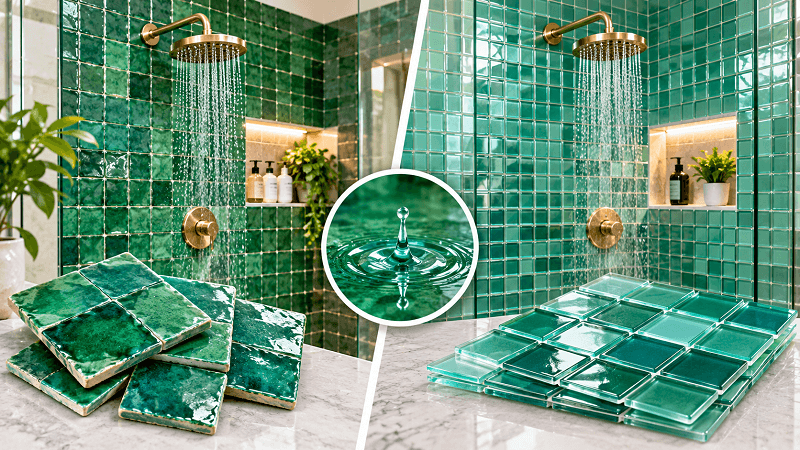
Picture a newly renovated bathroom, where the shower is a focal point finished in radiant green hues. Homeowners and designers often face a pivotal decision: should they select traditional Zellige tiles or opt for sleek glass tiles for high-moisture shower walls? Both materials promise a stunning Green Tile shower wall, but regular steam, splashes, and the need for easy maintenance raise questions about longevity and performance. The answer depends on how each material responds to water exposure, cleaning demands, and the realities of daily use. Zellige offers hand-crafted charm, while glass brings a modern, reflective surface. To choose wisely, it’s necessary to understand the practical differences that surface in a humid shower environment.
Material Composition And Water Absorption Rates Of Zellige And Glass Tiles
Zellige tiles are made from non-refined clay, kiln-fired, and hand-glazed in vibrant colors, including the popular green often seen in Moroccan-inspired bathrooms. Their artisanal nature means minor surface irregularities and subtle color shifts, which add character but also influence how these tiles react to water. Zellige is inherently porous unless fully glazed, so its water absorption rate is a key consideration for shower wall installations. In contrast, glass tiles are manufactured from solid sheets of glass, making them non-porous and virtually impervious to water penetration. This difference is critical when installing Green Tile shower wall materials in areas that experience frequent, direct contact with moisture.
Understanding water absorption rates for shower tile materials is essential for predicting performance. While glazed Zellige can resist surface moisture, any chips or unglazed edges may allow water infiltration. Glass tiles, by their very nature, do not absorb water, offering a clear advantage in terms of moisture resistance. This fundamental difference shapes how each tile type survives the rigors of a wet shower environment.
Grout Line Vulnerabilities And Sealing Requirements In Wet Environments
Installing Zellige tiles requires attention to the spacing and filling of grout lines, as their handmade edges can be uneven. Wider or irregular grout joints create more surface area for water to seep through, making grout selection and sealing a crucial step for maintaining a watertight shower wall. Most installers recommend a high-quality waterproof grout and regular application of penetrating sealers to protect both the tiles and the underlying wall substrate from long-term moisture damage. This practice is particularly important for Zellige, where unglazed clay at the edges or back of the tile is exposed.
Glass tiles, on the other hand, are usually manufactured with precision-cut edges, allowing for tighter grout lines that limit moisture intrusion. The non-porous nature of glass means sealing is rarely required for the tile itself, though grout lines still benefit from protective sealers. When comparing grout maintenance for wet area tiles, it’s clear that Zellige shower walls demand a more rigorous sealing routine. For those wanting a Green Tiled shower with minimal upkeep, this difference is worth weighing.
Cleaning Protocols And Mold Resistance For Green Shower Surrounds
Daily exposure to steam and water makes shower surrounds vulnerable to mold and mildew, especially if organic debris or soap scum accumulates. Zellige’s textured surface, with its slight undulations and handmade finish, can trap residues more easily than glass. Cleaning these tiles often requires gentle, non-acidic cleaners to protect the glaze and prevent etching, as harsh chemicals may damage the finish or leach into the porous clay. Glass tiles, with their smooth, non-absorbent surface, are less likely to harbor mold and can be wiped clean with a simple glass cleaner or a diluted vinegar solution.
For homeowners prioritizing mold resistance, glass tiles present a practical advantage. The lack of pores and seamless finish reduces the risk of microbial growth, even if cleaning is less frequent. Still, regular attention to grout lines remains necessary for both materials. When planning Green Tile shower wall materials, consider that glass offers an easier path to a low-maintenance, hygienic shower surface.
Long Term Durability And Aesthetic Retention Under Constant Steam Exposure
Over time, constant steam and heat can cause subtle changes in shower wall materials. Zellige tiles develop a patina, with glazes that may craze or develop fine lines—a characteristic that adds authenticity for some, but may be viewed as wear by others. Properly sealed and maintained Zellige tiles can last for years, but neglecting sealing or using abrasive cleaners can shorten their lifespan and lead to water damage beneath the surface. In contrast, glass tiles maintain their color and sheen even after years of exposure, as the material is not affected by steam or cleaning agents designed for bathrooms.
When selecting materials for a shower wall, durability and visual longevity are often top priorities. Those who appreciate the evolving character of handmade tiles may gravitate toward Zellige, while those seeking a consistently glossy, modern look will find glass more suitable. For a wide array of shades and finishes, browsing options like Green Tile gives a clear view of what each material can bring to a shower space. This tile category offers both traditional and contemporary styles for any bathroom design.
Conclusion
Choosing between Zellige and glass tiles for high-moisture shower walls comes down to balancing artisanal character with practical performance. For a surface that withstands heavy use and is straightforward to maintain, glass is the reliable choice. If unique texture and evolving beauty appeal, Zellige can succeed—provided sealing and cleaning protocols are followed closely. Before ordering, request samples of both types and test them for water resistance and cleaning compatibility in your planned space.